Sign In / Register


Construction of the long-awaited Warkworth to Te Hana expressway is set to begin in the coming months after the Government signed the project agreement and reached financial close on the first section of the Northland Expressway.
The 26km, four-lane expressway will include interchanges at Warkworth, Wellsford and Te Hana, with the Government saying it will cut travel times, improve resilience on the state highway network and create opportunities for Northland businesses and workers during construction.
Transport Minister Chris Bishop said the project would unlock economic growth while delivering a safer and more resilient transport link between Auckland and Northland.
“Northland has incredible potential and Warkworth to Te Hana is one of the most significant infrastructure investments this Government is making to support jobs, unlock economic growth, and provide a safer, more resilient connection for people and freight between Auckland and Northland,” he said.
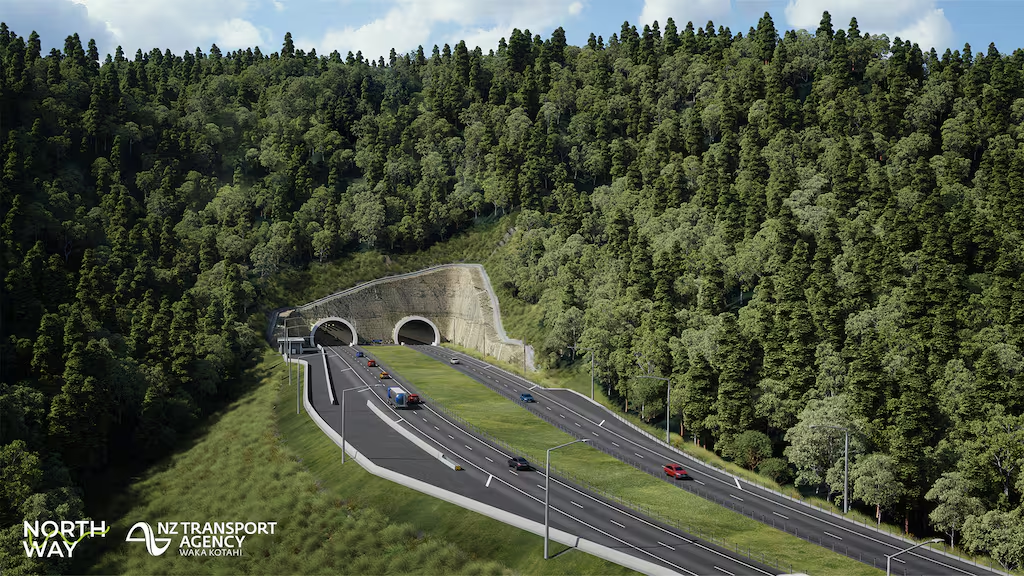
The scope includes a new 26-kilometre, four-lane expressway with grade-separated interchanges at Warkworth, Wellsford and Te Hana. It also includes 15 standardised bridges, two underpasses, numerous large culverts, 12 wetland stormwater treatment basins, and twin tunnels of around one kilometre through Kraack Hill above the Dome Valley near Dome Forest.
Bishop said the expressway would deliver significant long-term safety, resilience and travel time benefits for Northland.
“Over the life of the expressway, the benefits are expected to include 145 fewer deaths and serious injuries, travel time savings of seven to ten minutes per vehicle, more than 1,000 fewer closure hours caused by unexpected events such as severe weather, and the removal of around 1,000 heavy vehicles a day from the existing SH1 main streets through Wellsford and Te Hana.”
Bishop said three consortia were shortlisted to deliver the project after strong investor interest at the Government’s Infrastructure Investment Summit last year, with the Northway consortium selected as the preferred bidder in May.
He said the public-private partnership (PPP) represented good value for taxpayers, with the project’s net present cost of $3.649 billion coming in about $251 million below the Government’s estimate of what it would have cost under a traditional public sector procurement model.
Bishop said every dollar invested is expected to return $1.60 in wider economic benefits to New Zealand.
“Warkworth to Te Hana is the largest public-private partnership in New Zealand’s history and demonstrates the benefits that well-structured, highly competitive PPPs can deliver. Lessons from previous PPPs, including Transmission Gully, along with international best practice and market feedback, have been incorporated from the outset,” he said.
“This has included a more sophisticated approach to allocating risk, securing property and resource consents earlier, and establishing a stronger evidence base for setting affordability thresholds.”
Bishop said the Northway consortium was selected after submitting the strongest overall bid, offering the best combination of price, quality and risk.
“The agreement provides greater certainty over costs, reduces the risk of disputes and delays during construction, and delivers better value for taxpayers over its lifetime.
“A PPP is like getting a mortgage to buy a house. Rather than paying the full cost upfront, it is spread over a longer period and repaid over time. But a PPP goes further than financing alone. The private partner is also responsible for designing and building the road, maintaining it, and meeting agreed performance standards throughout the life of the contract.”
In August 2025, Cabinet agreed to a Crown Capital Contribution (CCC) towards construction of the project. The Government provided NZTA with a $1.6 billion, 10-year loan to finance the contribution. NZTA will make these payments to the contractor during the latter stages of construction, beginning from 1 July 2028 (FY2029).
“NZTA will also begin making regular Unitary Charge payments once the road opens. These payments are linked to agreed performance, safety, maintenance and availability standards, helping protect value for taxpayers over the 25-year operating period. Financial deductions apply if those standards or KPIs are not met,” Bishop said.
“Delivering wider employment and economic development benefits for Northland is also critically important. The Northway consortium expects around 60 per cent of total physical works spending to flow through local supply chains, creating opportunities for local subcontractors across earthworks, drainage, pavements, bridges and other civil engineering works.
“In addition, Northway has indicated it will create youth and graduate opportunities through internships, graduate roles, apprenticeships and school-to-work pathways, with a focus on local young people, including Māori and Pasifika. These opportunities will be backed by training, mentoring and pastoral support to help participants gain skills, qualifications and pathways into long-term infrastructure careers.
“Northland has incredible potential, and today’s agreement is a major milestone in unlocking the infrastructure, jobs and economic growth the region deserves.”